4th BioHackathon Germany report: Exploring Gamification Strategies to Enhance Bioinformatics Training
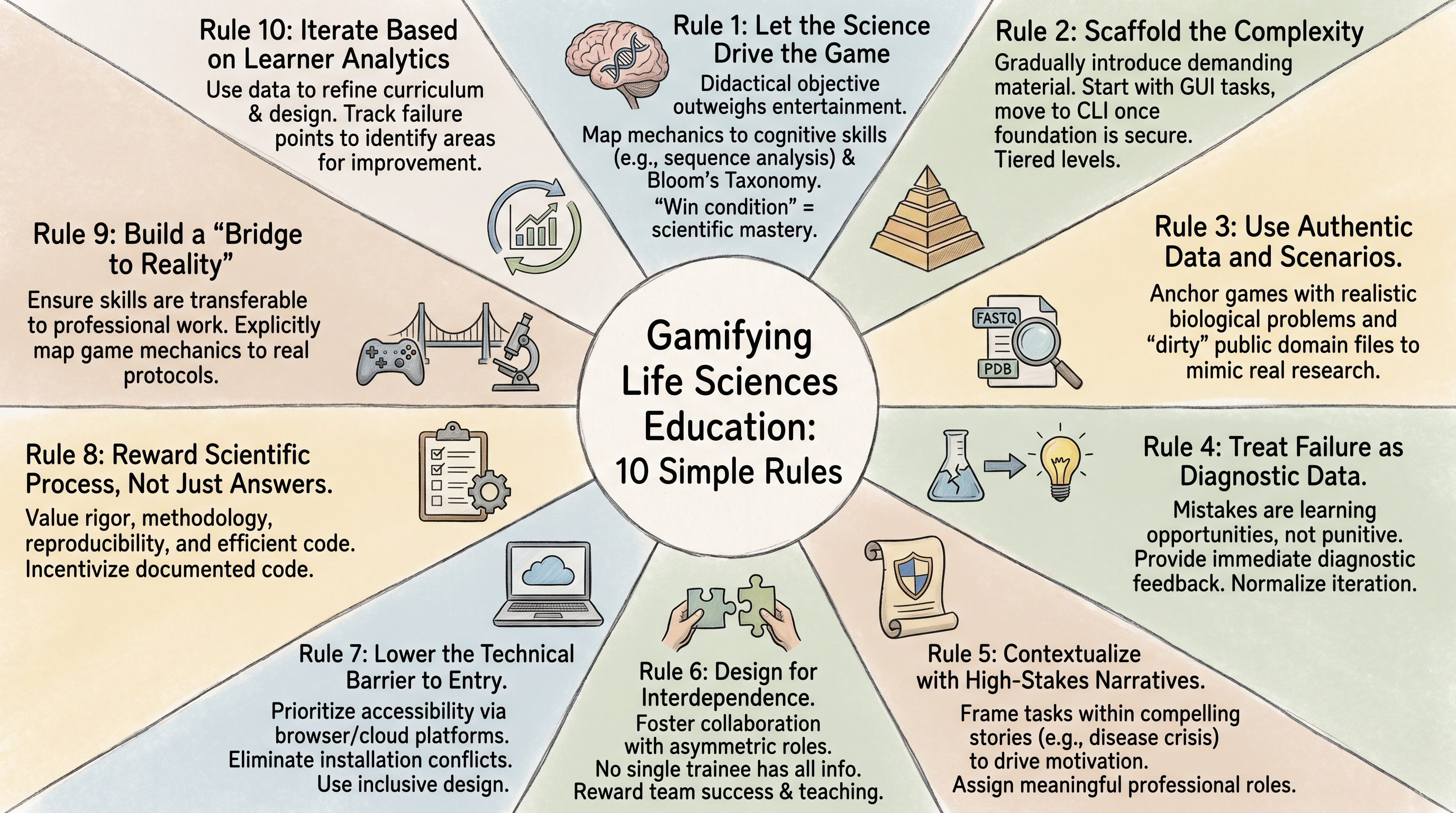
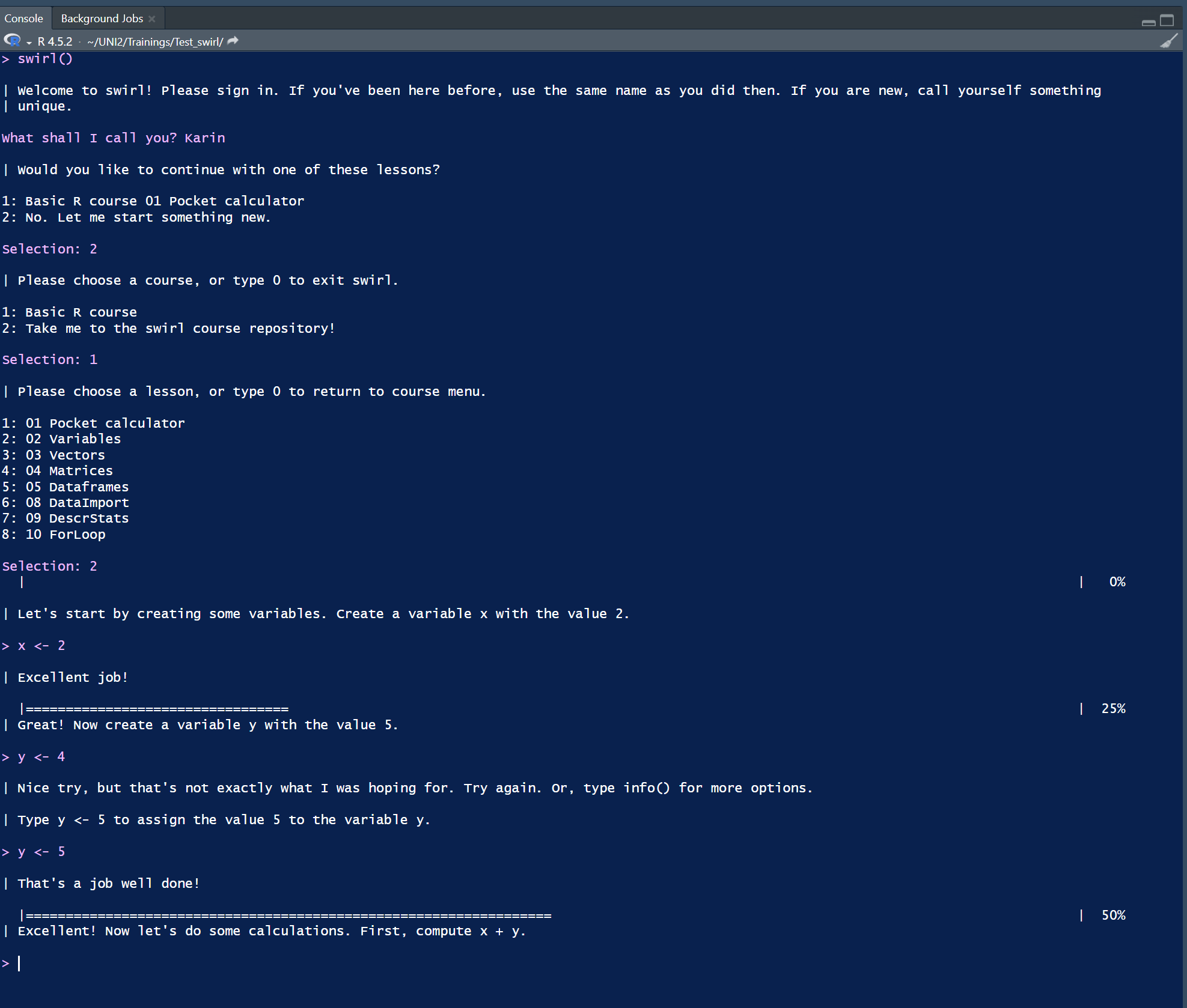
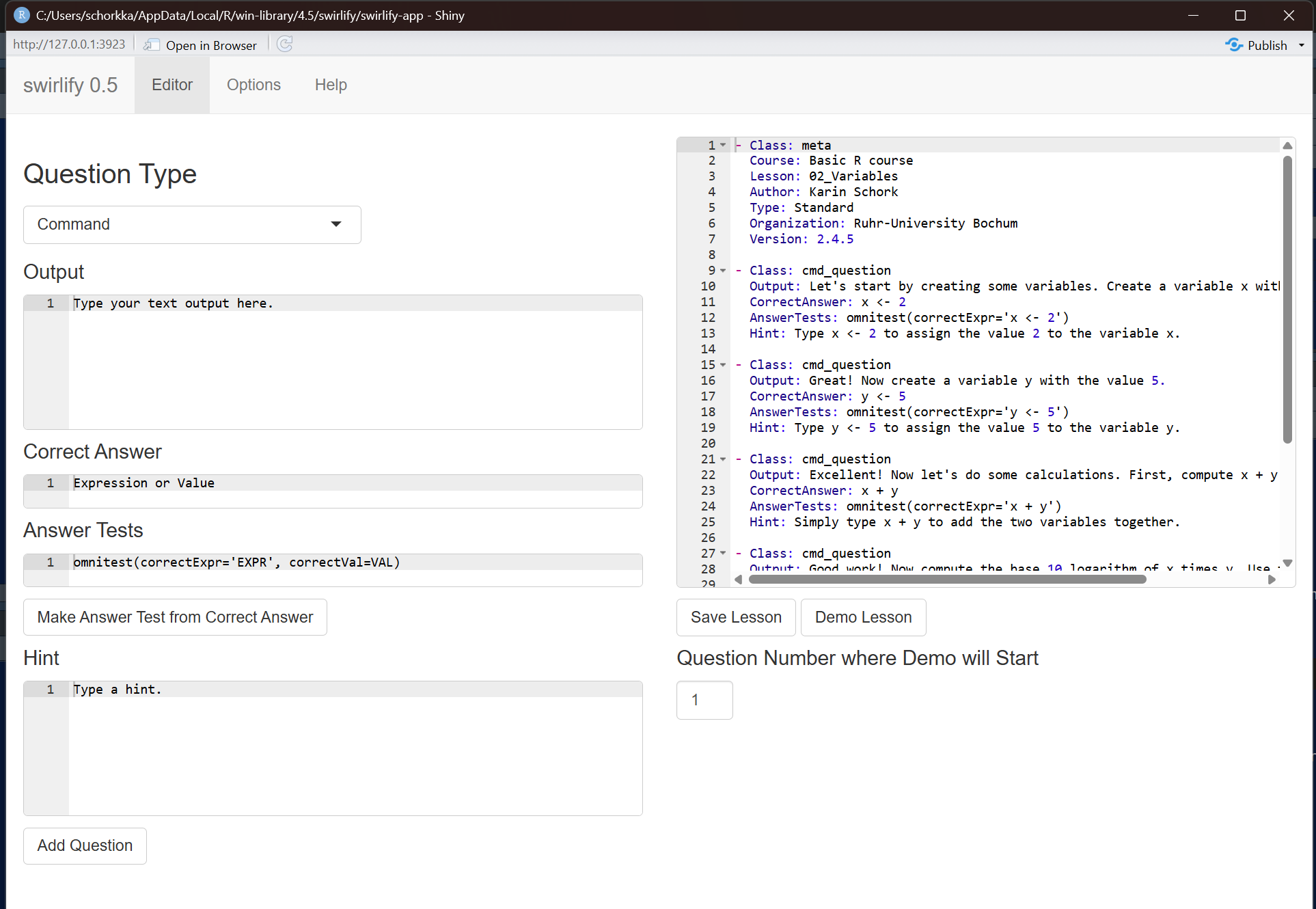
State of the art life science training features steep learning curves due to dense technical specifications and complex data formats, often causing cognitive overload and low learner retention. While gamification can enhance engagement, implementing it without trivializing scientific content remains challenging. As part of the Biohackathon Germany 2025, we explored strategies to adapt gamification for bioinformatics education. We curated a resource matrix evaluating 20 digital tools based on cost, implementation effort, and pedagogical impact. To guide instructors, we formulated the “Ten Simple Rules for Gamification in Bioinformatics and Life Sciences Education,” emphasizing a shift from superficial point systems to deep, competency-driven mechanics rooted in authentic data and high-stakes narratives. We validated this framework through two pilot implementations: translating an introductory R programming course into interactive console tutorials using swirl accelerated by Large Language Models (LLMs), and deploying browser-based Research Data Management (RDM) quizzes via Wordwall to reinforce FAIR principles. Our findings reveal that while specialized tools fit specific niches easily, broader open-source frameworks offer greater flexibility, with implementation workloads significantly mitigated by generative AI workflows. Ultimately, gamification serves as a powerful pedagogical asset when balanced correctly, transforming abstract computational workflows into engaging, collaborative simulations that bridge virtual training and professional scientific competency.
Figures
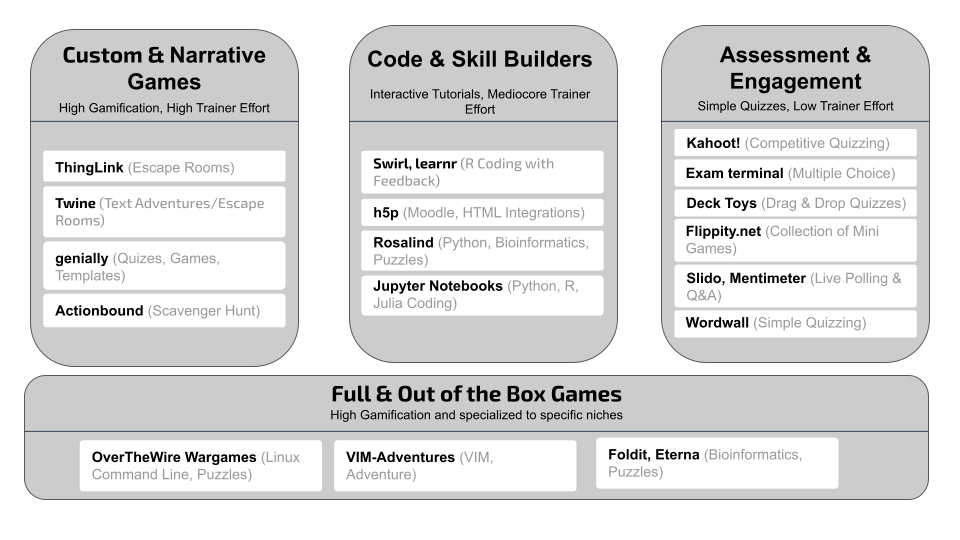
Categorization of tools into low, medium and high effort as well as into the possible impact of engagement on trainee...
Categorization of tools into low, medium and high effort as well as into the possible impact of engagement on trainees with addition of gamification tools, which can be used as is.