ZebraSeek integrates complementary facial and clinical evidence for rare disease prioritization
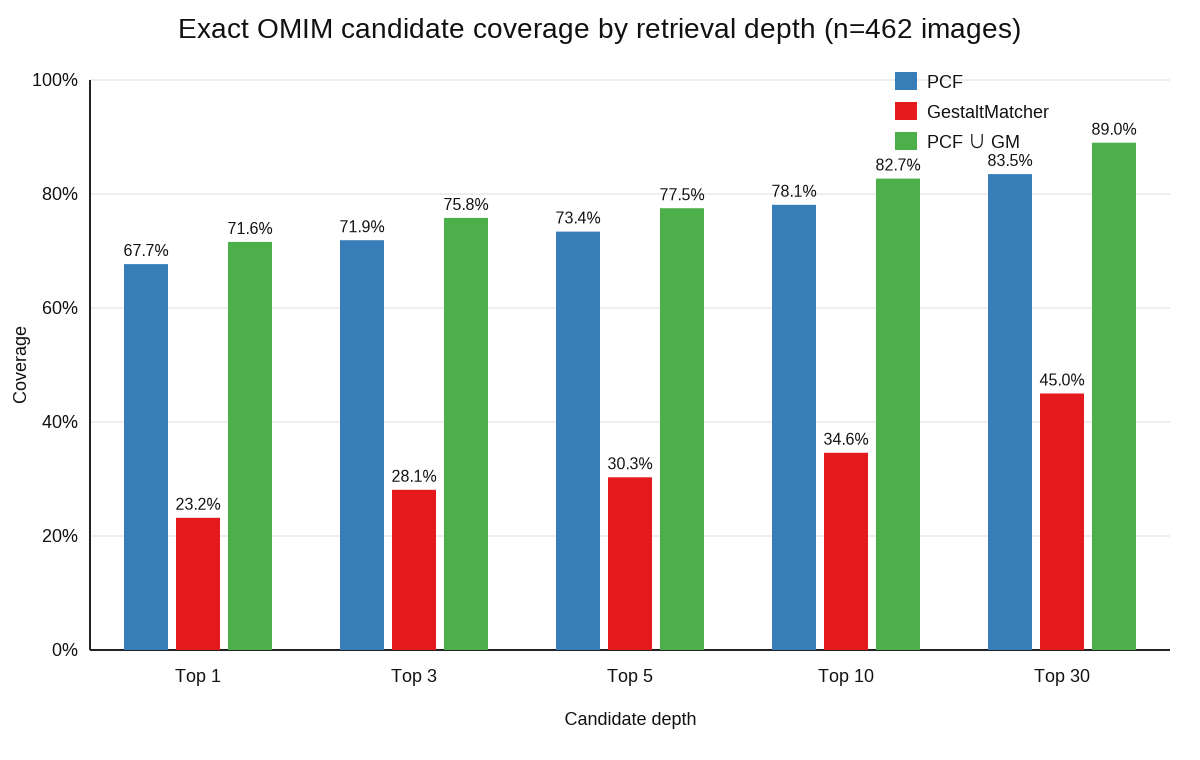
Rare diseases can remain undiagnosed for years because individual disorders are uncommon and clinically heterogeneous, while relevant clues are distributed across structured phenotypes, facial appearance, prior cases and disease knowledge. Computational tools can use Human Phenotype Ontology (HPO)-encoded findings, genomic data and increasingly diverse medical images, but these modalities are processed by models with different outputs and score scales. ZebraSeek converts clinical and facial inputs into ranked disease candidates with specialist tools, then uses a large language model (LLM) to integrateand externally check those candidates while retaining their sources. Facial-image analysis provides a complementary machine-readable phenotype that can capture patterns notfully represented by manually encoded HPO terms. In 74 literature-derived cases spanning 19 diseases, ZebraSeek placed the recorded diagnosis first in 50 (67.6%) and within five in 59 (79.7%); it recovered 11 diagnoses outside PubCaseFinder’s top five, while five diagnoses present in PubCaseFinder’s top five were absent from ZebraSeek’s final top five. During DBCLS BioHackathon 2026, we expanded analysis to 368 patients, 462 images and 54 disorders to examine how candidate depth affects coverage and downstream candidate count, and to assess the feasibility of case-specific candidate selection.
Figures
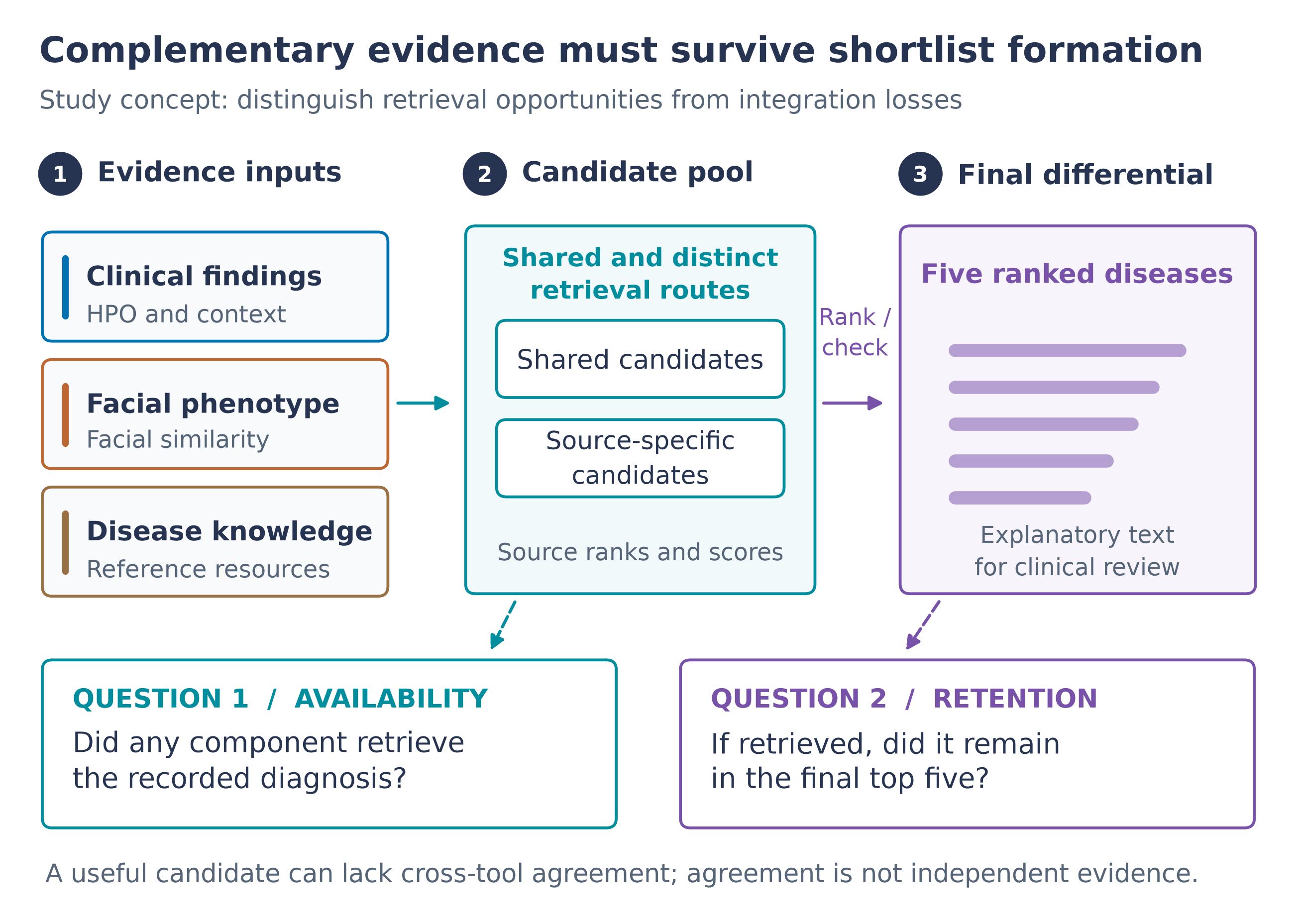
From complementary evidence to a reviewable differential. Different representations can retrieve shared or source-spe...
From complementary evidence to a reviewable differential. Different representations can retrieve shared or source-specific disease hypotheses. The conceptual distinction is between candidate availability and retention during shortlist formation. A source-specific candidate may be useful even without cross-tool agreement. Candidate-level integration connects specialist retrieval with LLM ranking and external-information checks; correctness and the value of each stage require separate evaluation.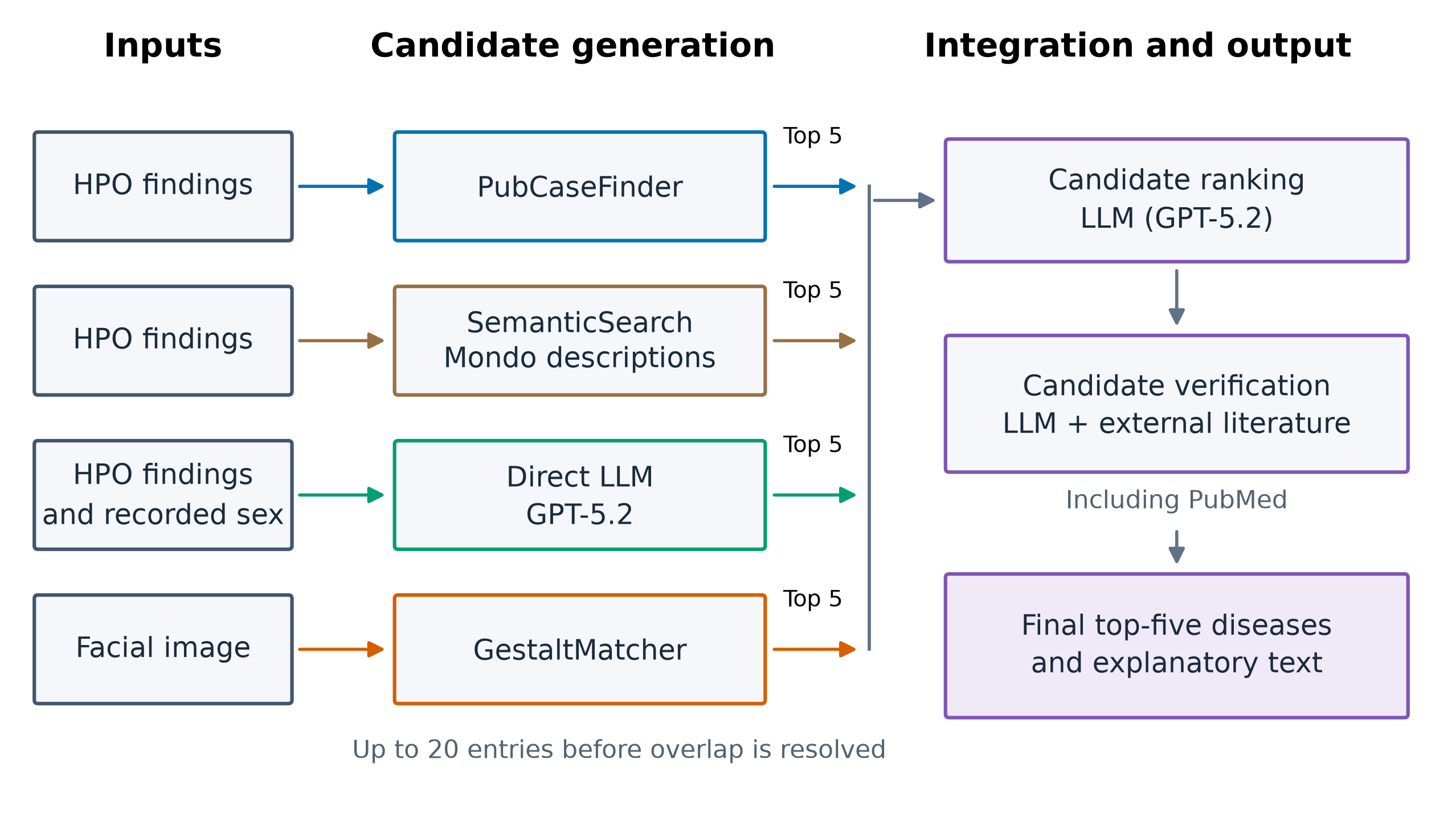
ZebraSeek workflow. Facial images are analyzed by GestaltMatcher; HPO terms are supplied to PubCaseFinder and Semanti...
ZebraSeek workflow. Facial images are analyzed by GestaltMatcher; HPO terms are supplied to PubCaseFinder and SemanticSearch; and HPO terms together with recorded sex are supplied to the direct LLM component. Each component provides up to five candidates. LLM-based ranking and literature-based verification produce a final top-five list with explanatory text.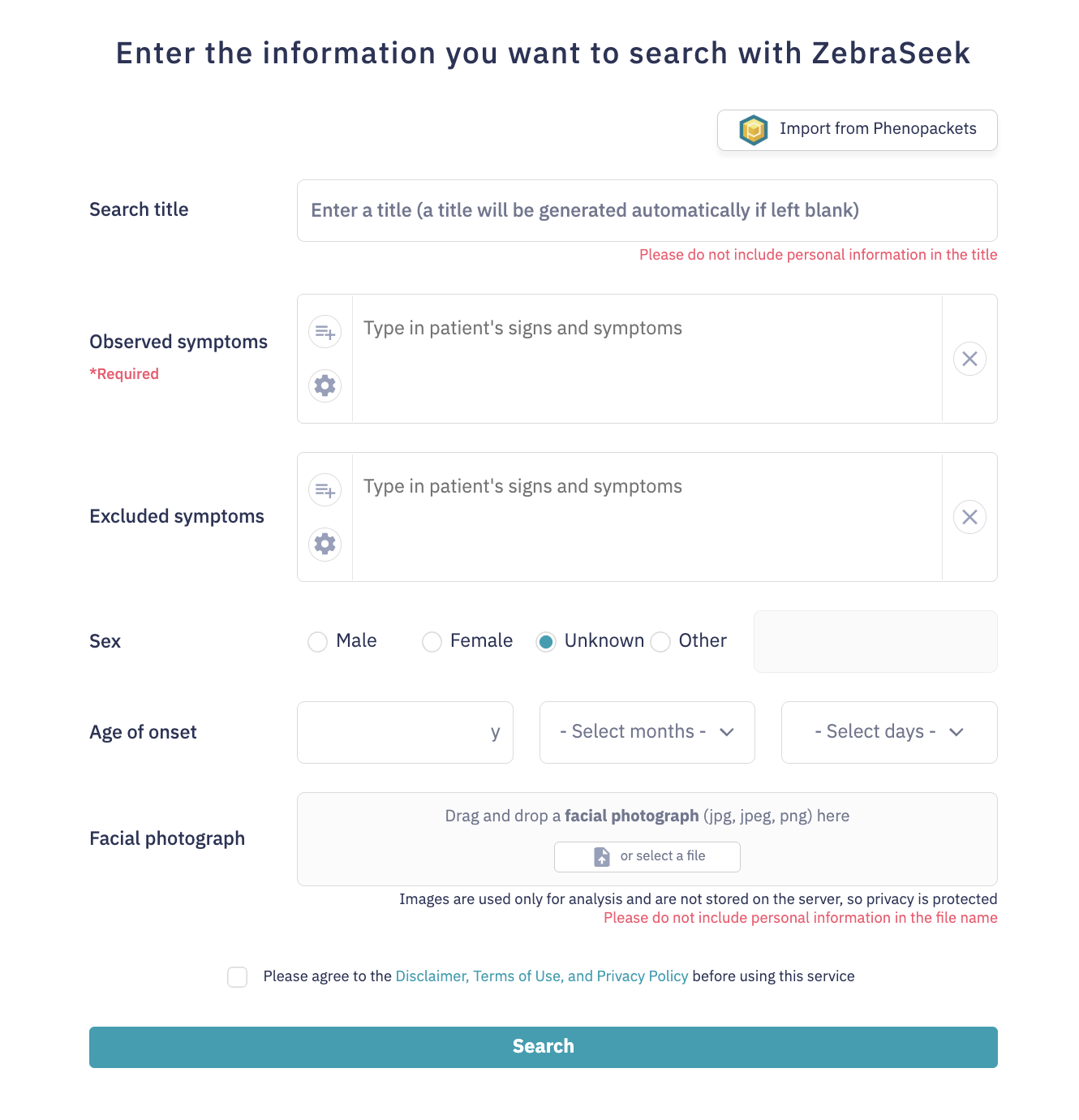
ZebraSeek clinical input interface. The input form supports Phenopacket import, observed and excluded findings, sex, ...
ZebraSeek clinical input interface. The input form supports Phenopacket import, observed and excluded findings, sex, age of onset and facial-image upload. No patient photograph or populated patient record is shown.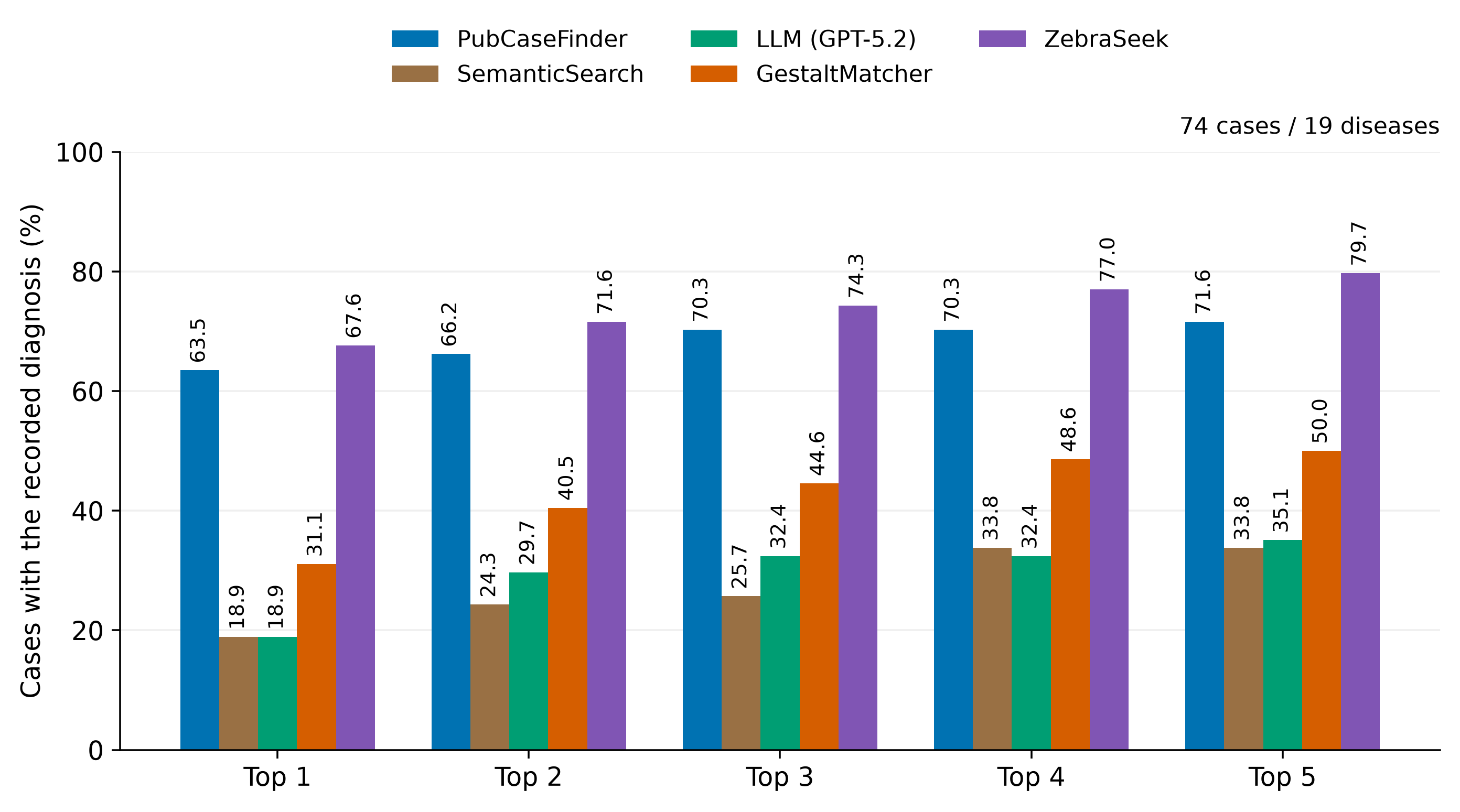
Top-k diagnostic recall across five methods. Top-k recall is the percentage of 74 cases whose recorded diagnosis appe...
Top-k diagnostic recall across five methods. Top-k recall is the percentage of 74 cases whose recorded diagnosis appears within the first k predictions. The same denominator is used at all cutoffs; this figure reports aggregate results without uncertainty estimates.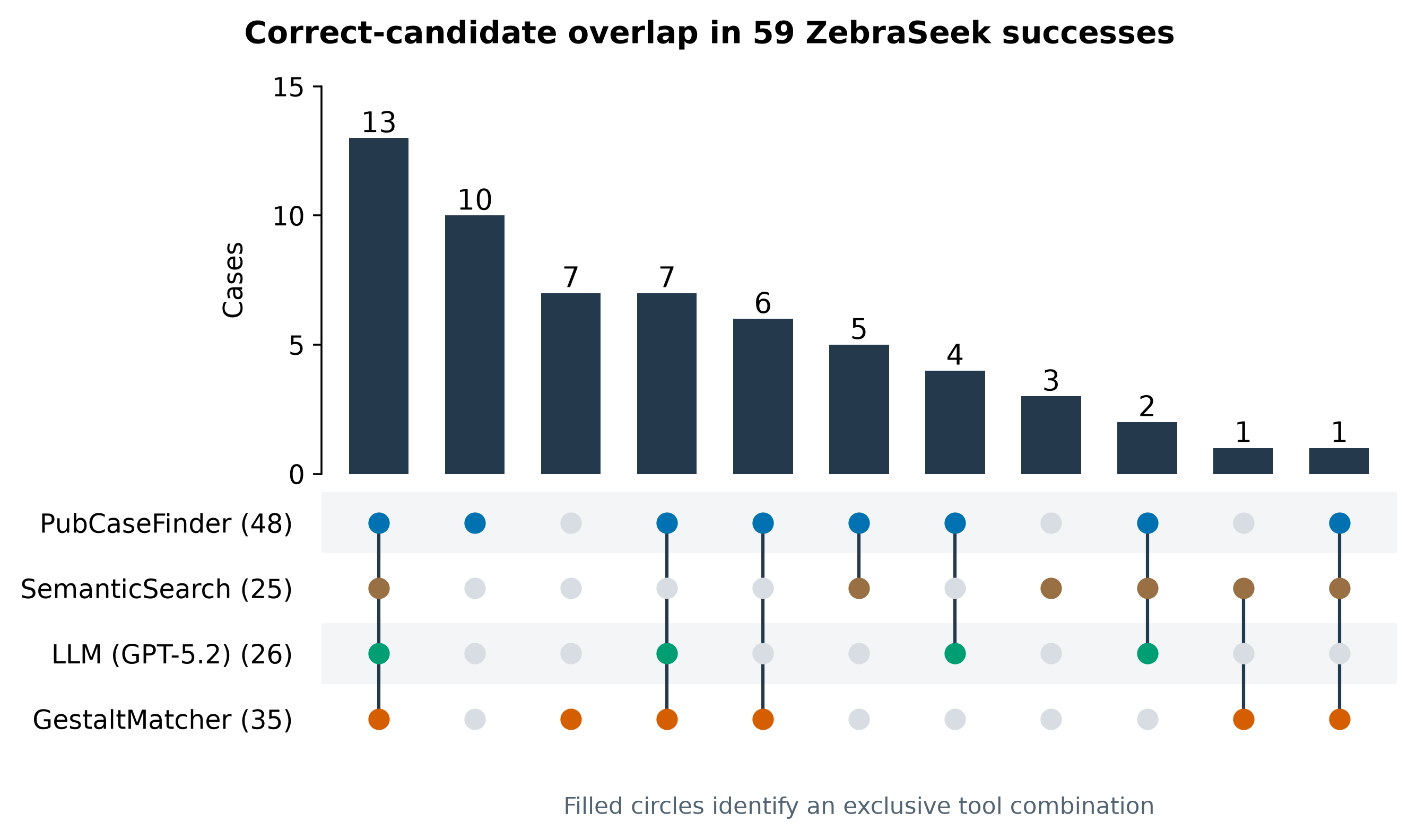
Component overlap among the 59 ZebraSeek successes at rank five. Each column represents an exclusive combination of c...
Component overlap among the 59 ZebraSeek successes at rank five. Each column represents an exclusive combination of component tools whose top-five lists contained the recorded diagnosis. Connected filled circles identify the tools in each combination; gray circles indicate absence. Bar heights show case counts. The totals at left are conditional on ZebraSeek success and are not the full-cohort recalls of the component tools.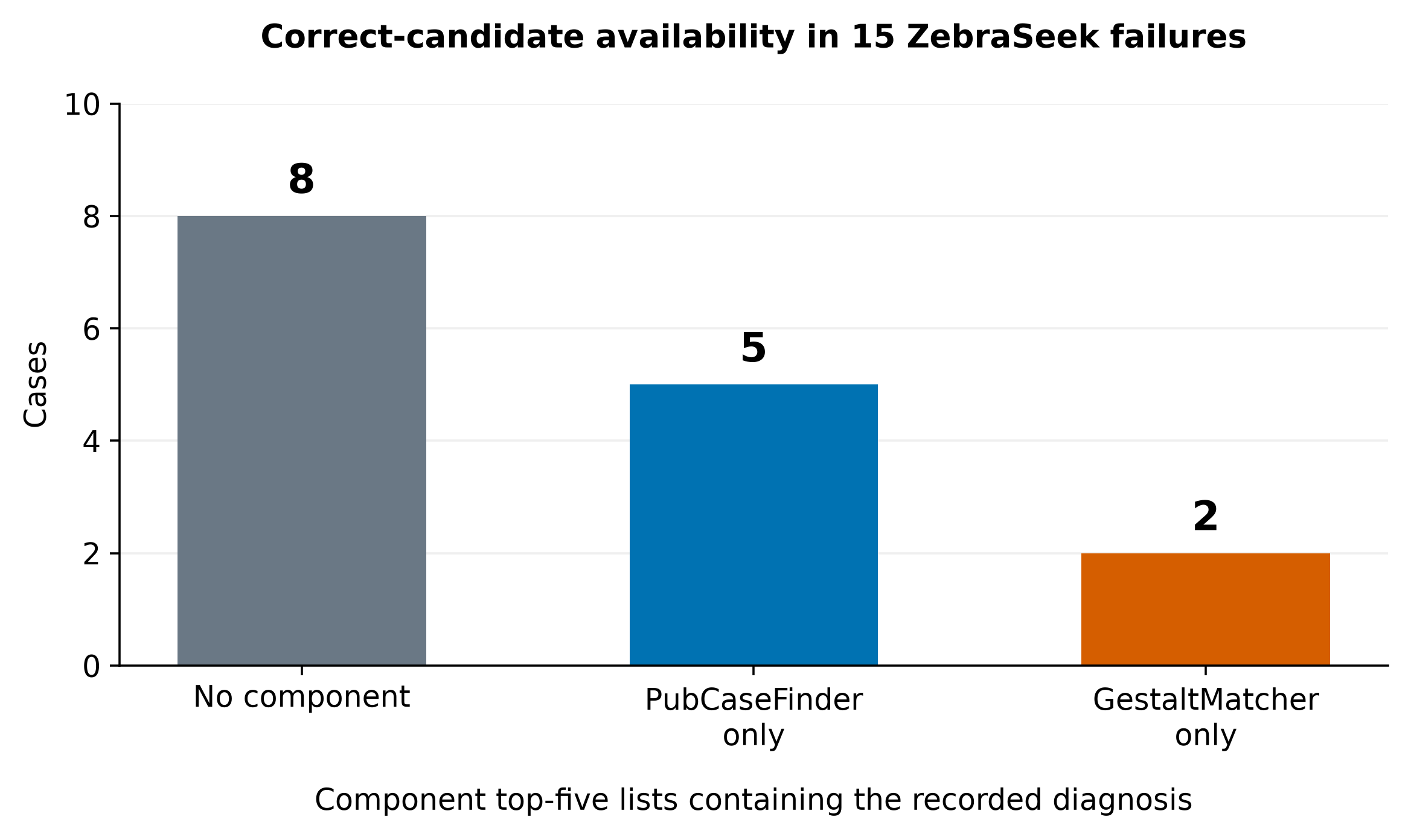
Correct-candidate availability among the 15 ZebraSeek failures at rank five. Eight cases had no correct candidate in ...
Correct-candidate availability among the 15 ZebraSeek failures at rank five. Eight cases had no correct candidate in any component’s top-five list. Five had a correct candidate only in PubCaseFinder and two only in GestaltMatcher. The latter seven cases distinguish failure to retain an available diagnosis from absence of that diagnosis in all initial lists.